
The basics
Utility easement maintenance starts with who owns what
Almost every dispute we see on an easement comes from one misunderstanding: people assume the utility owns the strip. Usually it does not.
You own the land. They own a right.
An easement is a right to use land for a stated purpose — run a line, access it, keep it clear. The underlying ground normally stays yours. You keep paying the taxes on it and it still counts in your lot area, which is why it shows on your survey rather than being cut out of it.
The document controls, not the custom
What the utility may do, and what you may not, is written in the recorded easement. They vary more than people expect — width, permitted uses, access rights, restoration obligations and who pays for what. Get a copy from your title file or the county clerk before you argue with anyone.
Transmission and distribution are different animals
High-voltage transmission corridors are held to federal reliability standards, so the utility clears them aggressively and on a schedule whether you like the result or not. Local distribution lines down a property line get far less attention, and that is where owners end up filling the gap.
The split
What they do, what you do, and the gap in the middle
In practice the responsibility divides roughly like this. Your easement document can change any of it, which is why reading it first is not optional.
The utility: anything threatening the facility
Trees and limbs that could contact or fall into the line, vegetation blocking access to poles, pads, vaults and valves, and the cyclical clearing of the corridor itself. They generally do not restore your landscaping to the condition it was in.
You: general upkeep and appearance
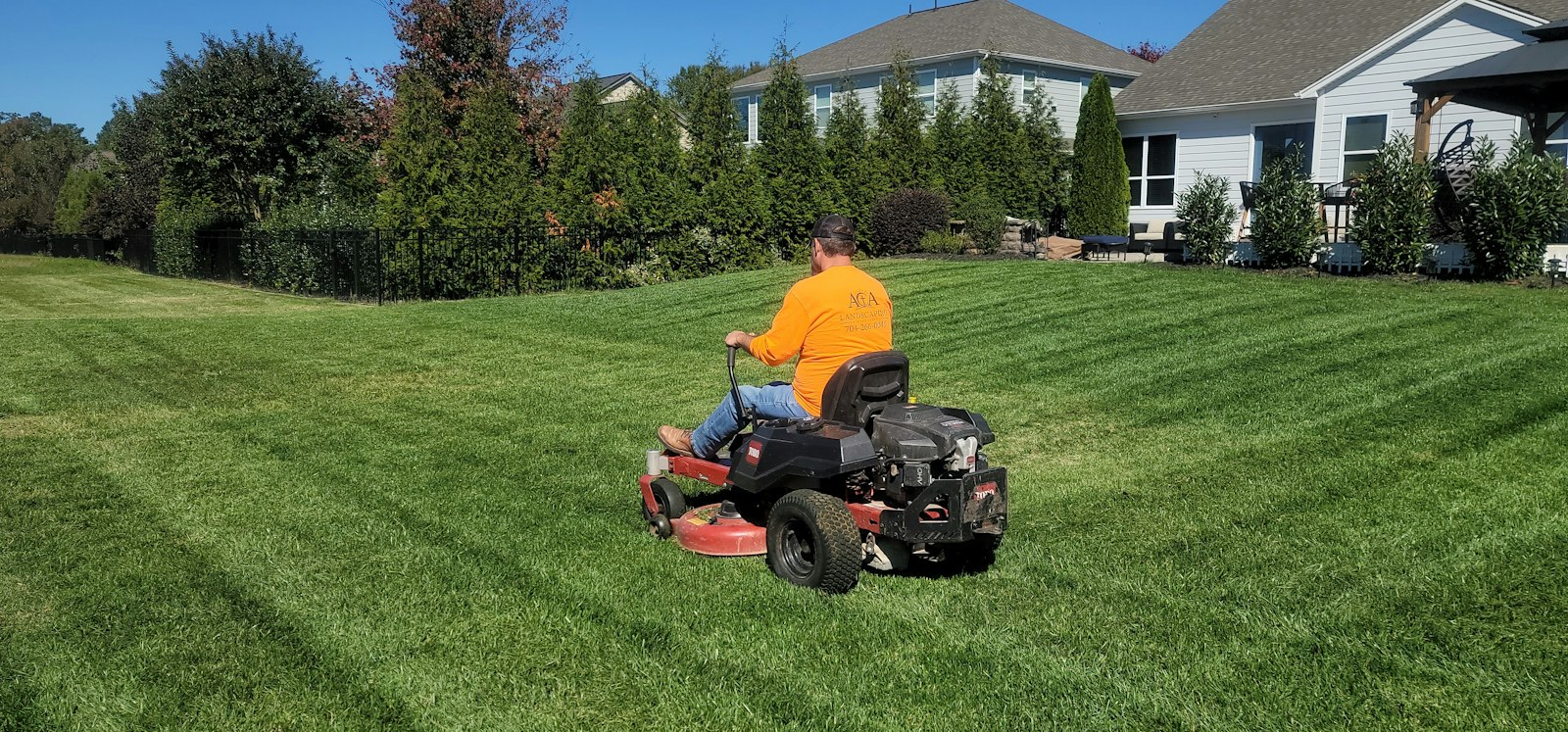
Mowing, brush control at the edges, litter and debris, drainage, and anything a tenant, a township ordinance or a lender expects the property to look like. If your site is held to a property-maintenance standard, the easement strip is included.
The gap: everything that is not urgent
Brush that is not yet near the line, a silted swale alongside it, saplings along the fence. The utility is not obliged and the owner assumes they are. Five years later it is a clearing project.
Access is a shared interest
A crew that cannot drive the easement at 2am in a storm cannot restore your power either. Keeping the route passable serves you before it serves them.

The rules
What you may not do inside the strip
This is the part that costs owners money, because it tends to surface after the work is already built.
Do not build in it
Structures, additions, decks, pools, retaining walls and sometimes even fences. If the utility needs access, anything in the way can be removed, and typically at your cost. Check the easement before the site plan, not after.
Be careful what you plant
Trees inside a corridor will be cut. Plant low, plant at the edges, and keep the mature height in mind rather than the nursery tag. This is the single most common avoidable loss on a commercial property.
Do not change the grade or the drainage
Filling, excavating or regrading over a buried facility can expose it, overload it, or redirect water into it. It is also how a cover-depth violation gets discovered.
Do not store or stack on it
Materials, containers, trailers and snow piles. Snow in particular — a winter pile on a pad-mounted transformer or a valve box is both an access problem and a safety one.
Call before any ground work
New Jersey One Call (811) is a legal requirement before digging in New Jersey, and an easement strip is the single most likely place on your property to find something buried. Private facilities are not covered by 811 and need a private locate.
What to do
A utility easement maintenance plan for a strip you have been ignoring
Most commercial properties have at least one. Here is the order that works.
Find the document
Title file, survey, or the county clerk’s records. You want the width, the purpose, the access rights and the restoration language.
Walk it and photograph it
Note what has grown, what has been stored there, what drains through it and whether a truck could get down it today.
Call the utility about anything near the line
Vegetation that threatens the facility is their work and usually free to you. Report it rather than cutting it yourself — working near an energized line is not an owner’s job.
Put the rest on a maintenance cycle
Mowing, edge brush, swale clearing and access. Folding it into an existing grounds or corridor clearing contract is cheaper than treating it as an occasional emergency.
Write it into tenant and vendor scopes
If a tenant is responsible for grounds, say explicitly whether the easement strip is included. Ambiguity here is how it gets skipped for a decade.
Questions
Utility easement maintenance: common questions
Call (732) 274-0496 if you want someone to walk the strip with you.
Can I make the utility mow my easement?
Generally no. Their obligation runs to their facility and their access, not to your appearance standard. Read the recorded easement — if it contains maintenance language in your favor, that is the lever.
Can I fence across an easement?
Sometimes, often with a gate requirement and never in a way that blocks access. Ask the utility in writing before you build, because removing a fence later is at your expense.
The utility left a mess after clearing. Is that normal?
Unfortunately yes. Many easements oblige restoration only to the extent of safety and access, not landscaping. Chip piles and rough-cut stumps are common. Cleanup after a utility pass is work owners routinely hire out.
Does an easement reduce my property value?
It can constrain what you can build, which matters most on tight commercial sites. It is a question for your attorney and appraiser, not your contractor — but the constraint is real and worth knowing before you buy.
Can you maintain the easement for us?
Yes, as part of grounds maintenance or as corridor work on a cycle. Anything close enough to the line to need certified crews, we handle through our right of way clearing side.
Keep going
Related pages
Where easement work usually connects.
Illustration photos: Declan Sun, Michael Smith on Unsplash.
