
The short version
Sealcoating vs crack filling vs repaving, in one table
Sealcoating vs crack filling is the wrong way to frame it: they do different jobs and usually go together. Crack filling keeps water out of the base. Sealcoating protects the surface from sun, oil and oxidation. Patching and repaving replace asphalt that has already failed. The right choice depends on what the damage says about the layers underneath.
Crack filling
Cleans out and fills individual cracks with hot rubberized filler so water can’t reach the base. The single most cost-effective step for a lot in fair condition.
Sealcoating
A thin protective coat over sound asphalt. It slows oxidation and weathering and restores a dark, even surface for new striping. It does not bridge or repair cracks.
Patching
Cuts out and replaces failed sections — potholes, crumbling edges, alligator cracking — down to sound material.
Overlay or repaving
A new layer over milled asphalt, or full reconstruction when the base itself has failed across much of the lot.
Read your lot
Four kinds of damage and what each one means
Walk the lot on a dry day and look at the pattern, not only the size, of the cracks.
Single lines, surface still tight
Transverse or longitudinal cracks with firm asphalt either side. Crack filling now; sealcoat once the cracks are filled.
Gray, rough, loose stone
The surface has oxidized and aggregate is starting to show. Sealcoating is the right protection if the asphalt is still structurally sound.
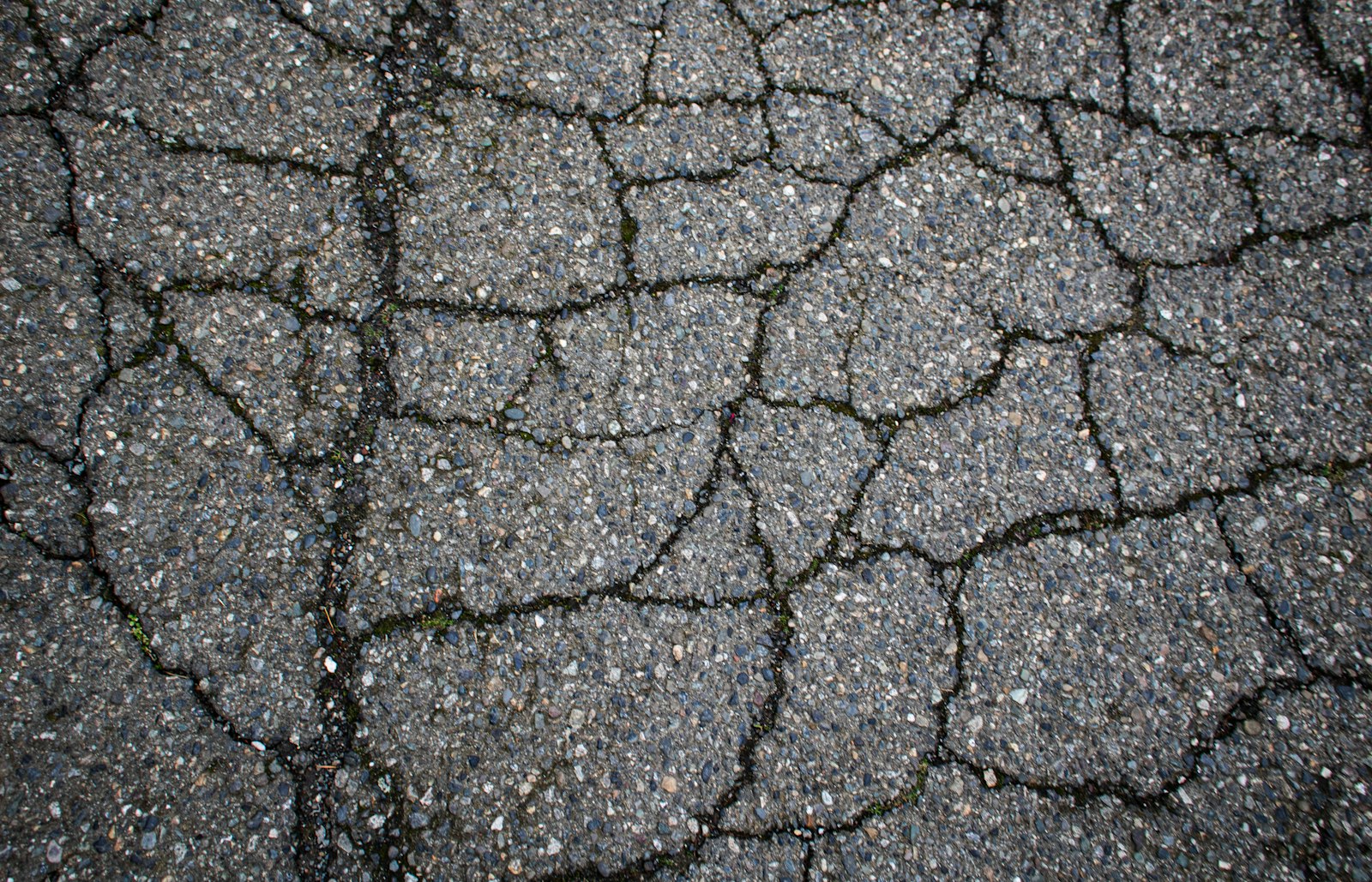
Interlocking cracks like a reptile skin
Alligator (fatigue) cracking means the base below has given way. Sealer and filler won’t hold — the area needs cutting out and patching.
Potholes, ruts and sinking areas
Failed base or drainage. Patch or reconstruct the area and fix where the water comes from, or it returns.

The order
Crack fill, then sealcoat, then stripe
Done in this order, each step protects the one before it. Done out of order, you pay twice.
Repair failed areas
Patch alligator cracking and potholes first; nothing on top of them will last.
Fill the cracks
Clean, dry and fill working cracks so water stays out of the base.
Sealcoat
Coat the sound surface once repairs have set. Most sealers need dry pavement and mild temperatures, so in New Jersey this is warm-season work.
Re-stripe
Lay out stalls, fire lanes and accessible spaces on the fresh surface — see our ADA parking striping guide.
Repave or keep repairing?
When a lot is past sealcoating
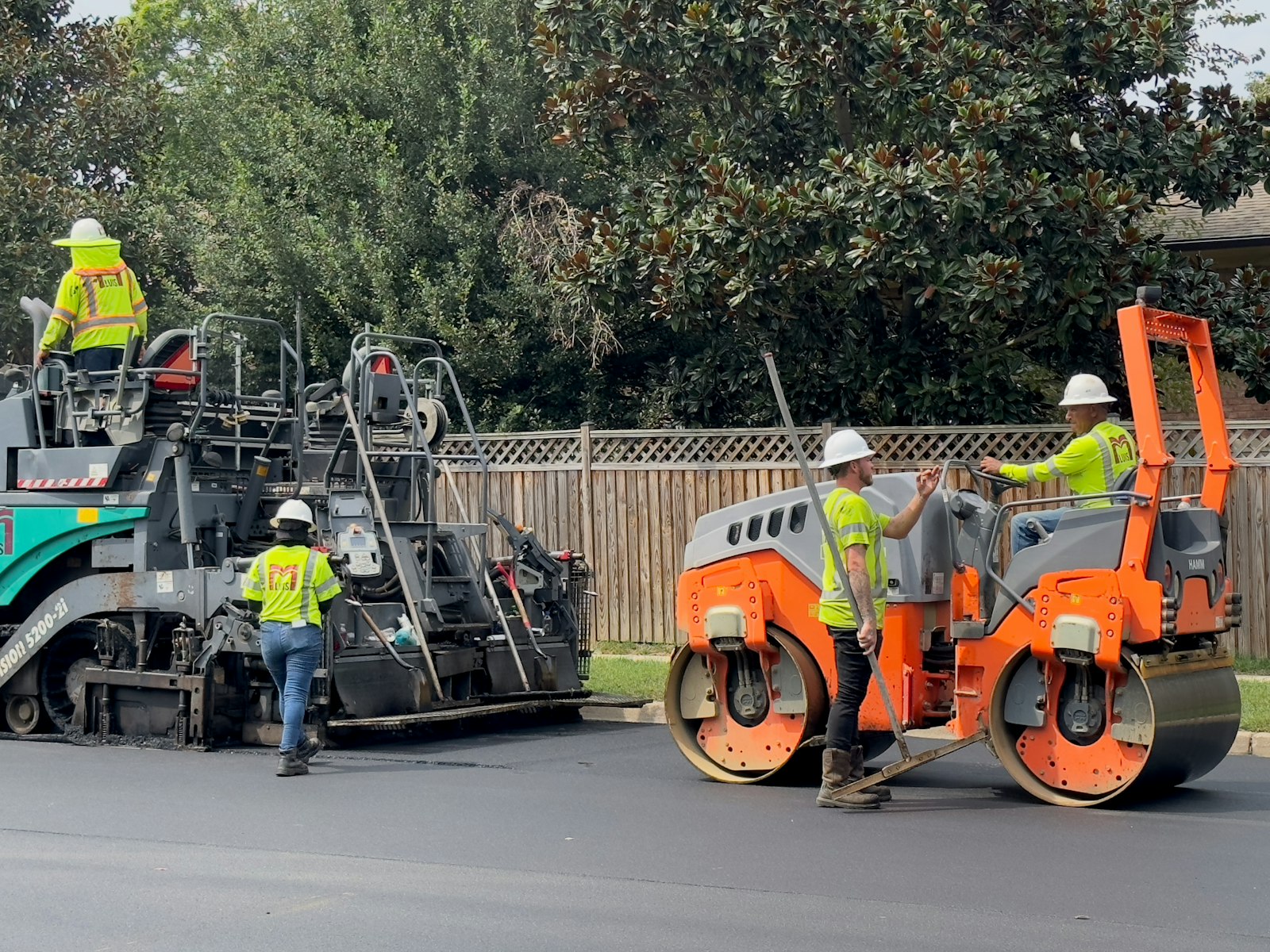
Repaving makes sense when repairs stop paying for themselves. These are the usual signs.
Alligator cracking across large areas
Patching most of the lot costs close to an overlay.
Water standing after rain
The grade or base has moved; surface treatments won’t change where water goes.
Crumbling at every edge and drain
Edges and inlets are failing faster than they can be patched.
Repeated potholes in the same places
The base under them needs rebuilding, not another patch.
Questions
What property managers ask about sealcoating and crack filling
For an honest read of your lot, call (732) 274-0496 and we’ll walk it with you.
How often should a commercial lot be sealcoated?
It depends on traffic, sun exposure and the product used. Busy retail lots wear faster than office lots. Walk the lot each spring: when the surface turns gray and rough and the stone starts to show, it’s time.
Can sealcoating fill cracks?
No. Sealer is a thin coating. Cracks need to be cleaned and filled first, or they show straight through the new coat and keep letting water in.
When is the best time of year in New Jersey?
Crack filling works in spring and fall. Sealcoating needs dry pavement and mild temperatures, so it’s scheduled in the warmer months. Planning in winter gets you on the schedule early.
How long is the lot closed?
Sealcoated sections are kept closed until the coating cures — usually phased by section so the property stays open.
Do you do the striping too?
Yes. Striping goes down after sealcoating, including fire lanes and accessible spaces.
Standards & related work
Where this guide fits
Pavement preservation — treating a surface before it fails — is the approach promoted by the Federal Highway Administration pavement guidance.
Illustration photos: Zoshua Colah, Ray Donnelly on Unsplash.
