
The short version
ADA parking lot striping starts with the count
ADA parking lot striping is set by the 2010 ADA Standards for Accessible Design (section 208). The number of accessible spaces depends on the total number of spaces in each lot, at least one in every six accessible spaces must be van-accessible, and every accessible space needs a marked access aisle and a sign. The U.S. Department of Justice treats re-striping as an alteration — so when the lines are repainted, the layout has to meet the current standard.
1 – 25 spaces
1 accessible space
26 – 50 spaces
2 accessible spaces
51 – 75 spaces
3 accessible spaces
76 – 100 spaces
4 accessible spaces
101 – 150 spaces
5 accessible spaces
151 – 200 spaces
6 accessible spaces
201 – 300 spaces
7 accessible spaces
301 – 400 spaces
8 accessible spaces
401 – 500 spaces
9 accessible spaces
501 – 1,000 spaces
2% of the total
Over 1,000 spaces
20, plus 1 for each 100 over 1,000
Van-accessible
At least 1 of every 6 accessible spaces (rounded up)
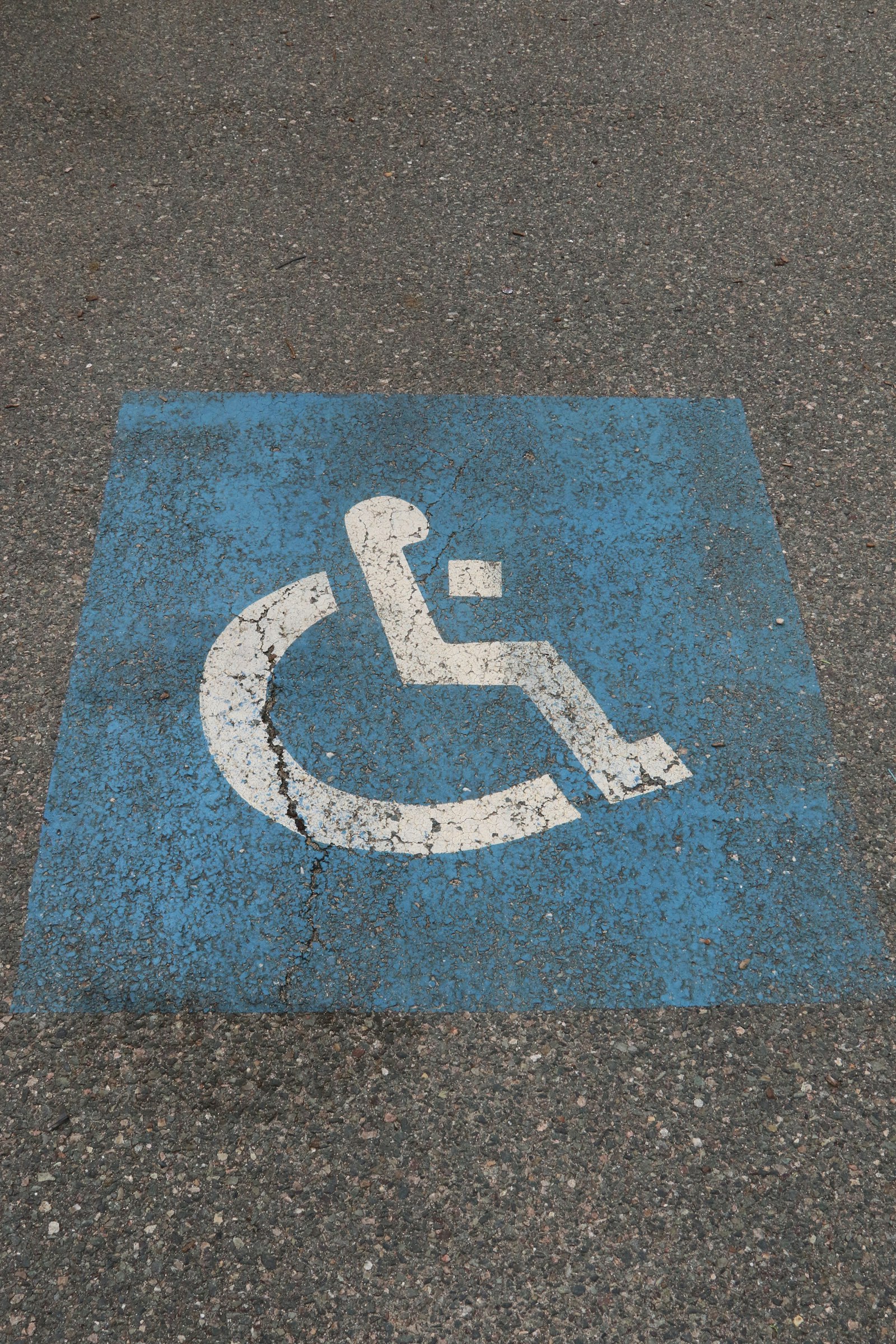
Layout
What each accessible space needs
These are the dimensions in the 2010 Standards. Your striping crew should be able to show them on the layout before painting.
Space width
Car spaces at least 96 inches wide. Van spaces at least 132 inches with a 60-inch aisle — or 96 inches with a 96-inch aisle.
Access aisle
At least 60 inches wide, full length of the space, marked so no one parks in it, and connected to the accessible route.
Signs
Every accessible space has the access symbol on a sign mounted at least 60 inches above the ground to the bottom of the sign; van spaces add “van accessible”.
Slope and location
Spaces and aisles nearly level (no steeper than 1:48 in any direction) and on the shortest accessible route to an accessible entrance.

Special cases
Sites that need more
Some properties need more accessible parking than the table above.
Hospital outpatient facilities
10% of the patient and visitor spaces serving the facility.
Rehabilitation and outpatient physical therapy
20% of the patient and visitor spaces.
Several lots on one site
Each lot is counted on its own — you can’t put every accessible space in one lot.
New Jersey rules
New Jersey enforces accessibility through the Barrier Free Subcode of its Uniform Construction Code (NJ DCA). Check with the municipal construction official before a re-striping changes the layout or count.
Before you re-stripe
A five-minute check
Walk the lot with this list before the crew arrives.
Count
Total spaces per lot, then the required accessible and van spaces from the table.
Locate
Are the accessible spaces nearest the accessible entrances?
Measure
Space and aisle widths, and whether aisles are marked and connect to a ramp or level route.
Signs
Present, readable, mounted high enough, and “van accessible” where required.
Questions
What managers ask about ADA parking lot striping
We lay out and stripe lots across Central New Jersey — call (732) 274-0496.
Does repainting the old lines count as an alteration?
Yes. The Department of Justice treats re-striping as an alteration, so the new layout needs to meet the 2010 Standards even if the old one didn’t.
Do we need a van-accessible space in a small lot?
Yes — one of every six accessible spaces must be van-accessible, so even a lot with a single accessible space needs it to be van-accessible.
Can two accessible spaces share one access aisle?
Yes, an aisle can serve spaces on both sides, which often saves room.
Is blue paint required?
The federal standard requires the aisle to be marked, not a color. Blue is common practice; follow local code where it specifies more.
Can you fix the layout when you sealcoat?
Yes. Sealcoating is the best moment to correct a layout, because the new lines go on a clean black surface.
Illustration photos: Mick Haupt, David Trinks on Unsplash.
