
What the work is
Retention pond clearing is three separate jobs, not one
People call it retention pond cleaning, basin clearing or just “getting the pond done,” but a basin that has been left alone for a few years needs three different crews’ worth of work, and they have to happen in order. Clear the vegetation, then you can reach the structures. Open the structures, then you can see what the sediment is doing.
Vegetation off the earthworks
Saplings, sumac, multiflora rose and phragmites get cut back to grade on the side slopes, the embankment and the emergency spillway. Woody roots open channels through an earthen embankment, and once a trunk is thick enough, removing it leaves a void that has to be repaired rather than just backfilled. This is the part that gets expensive if it waits.
Structures opened and checked
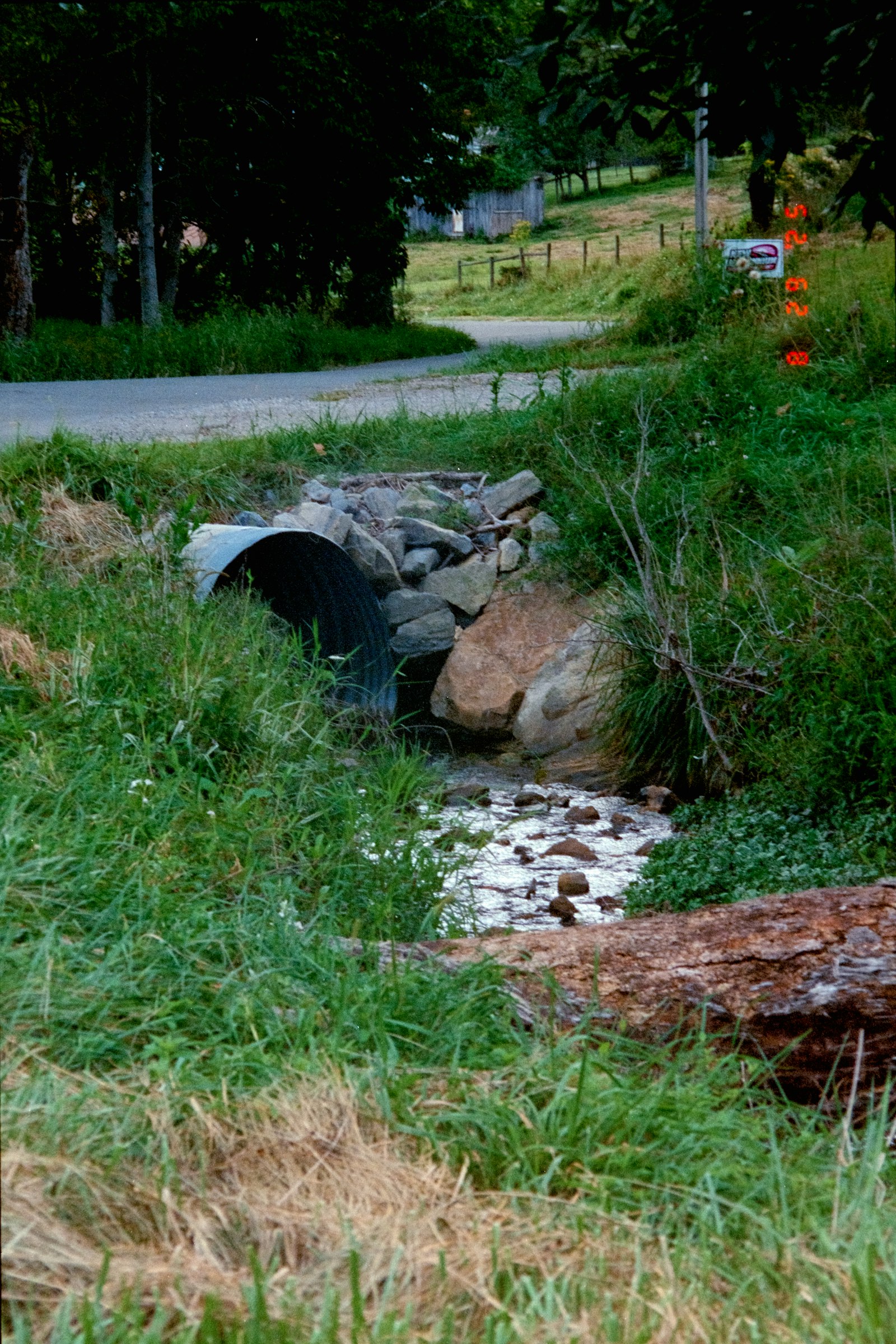
Inlets, the outlet structure, the trash rack or debris screen, the orifice plate and the riprap apron all get hand-cleared. A six-inch low-flow orifice packed with leaf litter will hold a basin full for days, which is usually the first thing a property manager actually notices.
Sediment and debris out
Silt reduces the volume the basin was designed to hold, and the forebay fills first by design — that is what it is for. We measure against the original grade where a plan is available, pull the accumulated material, and restore the low-flow channel so the basin drains down between storms instead of staying wet.
Why it matters
A wet basin is a compliance problem before it is a flooding problem
New Jersey basins are built as a condition of approval, and the maintenance plan that came with the approval does not expire. Townships and county engineers inspect them, and the finding is almost always the same three items: woody vegetation on the embankment, a blocked outlet, and sediment above the design elevation.
Standing water nobody designed for
A detention basin is supposed to empty. One that holds water between storms is breeding mosquitoes and is no longer providing the storage the site was approved for.
Embankment integrity
Trees on a berm are not landscaping. Roots create seepage paths, and a windthrown tree takes a root plate — and a piece of your embankment — with it.
Downstream liability
If the basin cannot hold its design storm, the water goes somewhere. Usually the neighbor’s lot, the access drive, or the road.
Inspection findings compound
A notice for vegetation is cheap to resolve. The same basin two years later is a sediment-removal project with a disposal line item.

How we run it
From first walk-through to a basin that drains
Most of the basins we clear have not been touched in years, so the first visit is about finding out what is actually under the growth.
Walk the basin with you
We walk the whole perimeter, the inflow points, the outlet structure and the emergency spillway, and we ask for the stormwater maintenance plan and the as-built if you have them. If you do not, the township usually does.
Scope what the basin needs
You get the work separated out — vegetation, structures, sediment — so you can do all of it or stage it across budget years. We will tell you plainly which items can wait and which cannot.
Markout and access
Outlet pipes, forcemains and utility crossings near a basin are common. We file the New Jersey One Call (811) markout and plan an access route that will carry equipment without rutting the slope or the lawn you have to live with afterwards.
Clear, open, haul
Cut material is chipped or hauled depending on the site. Sediment and debris leave the property. We do not leave brush piles on the bank, which is how the next cycle of growth starts.
Leave you the paperwork
Photographs before and after, what was removed, and what we saw that is worth watching. That is what you forward when the township asks.
Timing
Winter is the right time to clear a basin
This is the one piece of property maintenance where the calendar does most of the work for you.
The basin is dry
Late fall through early spring is when a detention basin is at its lowest and the ground is firmest. Equipment can work the slope without sinking into it or leaving ruts that have to be regraded in April.
You can see the problem
With the leaves down, the actual extent of the woody growth is visible. Scoping a basin in August means guessing at what is behind the green.
Nesting season has not started
Clearing brush and scrub in the dormant months avoids active bird nests, which is both the right thing to do and the thing that keeps a project from stopping halfway.
Ahead of spring runoff
Snowmelt and spring storms are when an undersized basin shows you what it cannot hold. Clearing in winter means the storage is there when the water arrives.
Where we work
Retention pond clearing across the Route 130 and Route 1 corridor
We are based in Cranbury, which puts most of these basins inside a half-hour drive. Middlesex, Mercer, Monmouth and Somerset counties.

Questions
What property managers ask us first
Short answers. If yours is not here, call (732) 274-0496.
Is this the same thing as basin maintenance?
Retention pond clearing is the catch-up work on a basin that has gotten away from you — heavy vegetation, blocked structures, accumulated sediment. Basin maintenance is the routine cycle that keeps it from happening again: mowing the slopes on a schedule, checking the outlet after big storms, and keeping the forebay clean. Most clients start with clearing and move onto a maintenance cycle.
Do we need a permit?
Routine maintenance to restore a basin to its approved design normally does not need a new approval, but work that changes grades, touches a regulated wetland or a stream corridor, or alters the outlet structure can. We flag it during the walk-through rather than halfway through. The New Jersey DEP stormwater program is where the state rules sit, the federal stormwater program sets the backdrop, and our plain-language summary of what New Jersey requires covers the maintenance plan side.
How often does a basin need clearing?
If it is mowed and the outlet is checked a few times a year, it should never need clearing again — that is the point of a maintenance cycle. A basin that has been left alone typically needs a clearing project every three to five years, and the gap between them gets shorter each time.
Can you handle the sediment disposal?
Yes. Basin sediment is handled and disposed of according to what it is and where it came from; a forebay at an industrial site is not the same as one behind an office park. We sort that out before the equipment shows up, not after it is in a truck.
Do you work on retention ponds as well as detention basins?
Both. A retention pond holds a permanent pool, a detention basin drains down between storms, and the maintenance differs — permanent pools add shoreline, algae and aquatic vegetation to the list. People use the two names interchangeably when they call, and we sort out which one you have on site.
Keep going
Related work
Basins rarely fail on their own. These are the three pages worth reading next.
- Stormwater basin maintenance — the routine cycle that prevents clearing projects
- Guide: detention basin vs retention pond — which one do you have?
- What New Jersey actually requires of a stormwater basin
- Land and ground clearing in Cranbury and the surrounding townships
- Parking lot sweeping — where most of the sediment in your basin comes from
Illustration photos: Ilya Semenov, Brooke Balentine, Declan Sun on Unsplash.
